Almost everyone experiences acidity at some point in life. Whether it’s after eating spicy food, drinking too much coffee, or having a late-night meal, occasional heartburn is common and usually harmless. However, if the burning sensation becomes frequent or starts affecting your daily life, it may be more than just acidity. It could be Gastroesophageal Reflux Disease (GERD), a chronic digestive condition that requires medical attention.
Many people ignore persistent acid reflux symptoms, assuming they will disappear on their own. Unfortunately, untreated GERD can lead to serious complications affecting the esophagus and overall digestive health.
At Mission Gastro Hospital, Ahmedabad, our experienced gastroenterologists specialize in diagnosing and treating acidity, acid reflux, GERD, ulcers, and other digestive disorders using advanced diagnostic techniques and personalized treatment plans.
In this guide, we’ll explain the difference between acidity and GERD, common symptoms, causes, treatment options, and when it’s time to visit a gastro specialist.
What is Acidity?
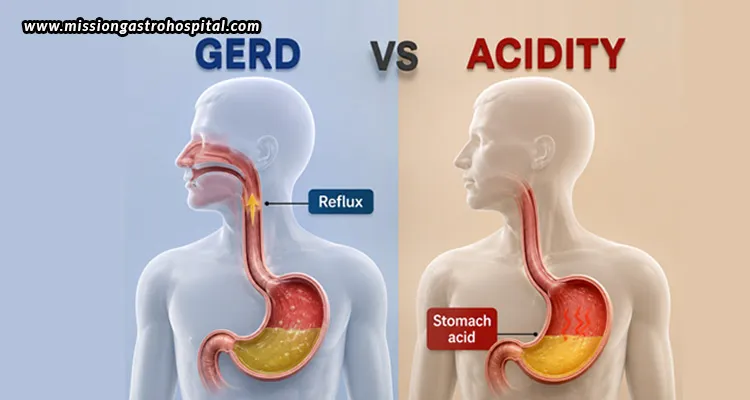
Acidity occurs when your stomach produces excess acid or when stomach acid temporarily flows back into the food pipe (esophagus). This usually results in a burning sensation in the chest, commonly known as heartburn.
Occasional acidity is very common and can be triggered by:
- Spicy or oily foods
- Fried snacks
- Coffee and tea
- Carbonated drinks
- Alcohol
- Smoking
- Stress
- Skipping meals
- Eating heavy meals late at night
For most people, acidity improves with lifestyle changes or over-the-counter antacids.
What is GERD?
GERD (Gastroesophageal Reflux Disease) is a chronic digestive disorder where stomach acid repeatedly flows back into the esophagus because the lower esophageal sphincter (LES) becomes weak or doesn’t close properly.
Unlike occasional acidity, GERD is a long-term condition that requires medical diagnosis and treatment.
Doctors generally suspect GERD when acid reflux occurs:
- More than twice a week
- For several weeks or months
- Despite taking medications
- Along with complications like swallowing difficulty or chest pain
Without treatment, GERD can damage the lining of the esophagus and increase the risk of more serious conditions.
Acidity vs GERD: Understanding the Difference
Although the symptoms may appear similar, acidity and GERD are not the same.
Acidity
- Happens occasionally
- Usually triggered by certain foods
- Improves quickly with antacids
- Rarely causes complications
- Symptoms are mild and temporary
GERD
- Happens frequently
- Symptoms return repeatedly
- May require prescription medication
- Can damage the esophagus
- Needs evaluation by a gastroenterologist
If heartburn becomes part of your everyday life, it should never be ignored.
Common Symptoms of Acidity
People with simple acidity may experience:
- Burning sensation in the chest
- Sour taste in the mouth
- Mild indigestion
- Bloating
- Burping
- Stomach discomfort after meals
- Temporary acid reflux
Symptoms usually improve within a few hours.
Common Symptoms of GERD
GERD symptoms are usually more persistent and severe.
These include:
- Frequent heartburn
- Acid reflux several times a week
- Regurgitation of food or sour liquid
- Difficulty swallowing
- Chronic cough
- Hoarseness of voice
- Persistent sore throat
- Chest discomfort
- Bad breath
- Feeling of food getting stuck
- Sleep disturbance due to acid reflux
Some patients may also experience asthma-like symptoms because stomach acid irritates the airways.
What Causes GERD?
Several factors increase the risk of developing GERD.
Common causes include:
Obesity
Excess abdominal fat increases pressure on the stomach, pushing acid upward.
Pregnancy
Hormonal changes and increased abdominal pressure often cause acid reflux.
Smoking
Smoking weakens the lower esophageal sphincter.
Poor Eating Habits
Eating large meals, lying down immediately after eating, or eating late at night can trigger GERD.
Certain Medications
Painkillers, blood pressure medicines, and some antidepressants may worsen reflux symptoms.
Hiatal Hernia
A hiatal hernia allows part of the stomach to move above the diaphragm, increasing acid reflux.
When Should You See a Gastro Doctor in Ahmedabad?
Occasional acidity usually doesn’t require specialist care.
However, you should consult a gastroenterologist immediately if you experience:
- Heartburn more than twice every week
- Symptoms lasting longer than two weeks
- Difficulty swallowing
- Unexplained weight loss
- Persistent vomiting
- Blood in vomit
- Black-colored stools
- Severe chest pain
- Chronic cough due to acid reflux
- Hoarseness lasting several weeks
- No relief after taking antacids
These symptoms may indicate GERD or another serious digestive disorder requiring proper diagnosis.
How is GERD Diagnosed?
At Mission Gastro Hospital, doctors may recommend one or more investigations depending on your symptoms.
These include:
Upper GI Endoscopy
An endoscope helps examine the esophagus, stomach, and upper intestine to detect inflammation, ulcers, or other abnormalities.
pH Monitoring
Measures how often stomach acid enters the esophagus.
Esophageal Manometry
Checks how well the muscles of the esophagus are functioning.
Barium Swallow X-ray
Helps identify structural abnormalities or swallowing disorders.
Early diagnosis helps prevent long-term complications.
Treatment Options for Acidity and GERD
Treatment depends on the severity of symptoms.
Lifestyle Changes
Many patients improve significantly by making simple lifestyle modifications.
Doctors usually recommend:
- Eat smaller meals
- Avoid overeating
- Reduce spicy and oily foods
- Avoid caffeine and alcohol
- Quit smoking
- Maintain a healthy weight
- Avoid lying down immediately after meals
- Eat dinner at least three hours before bedtime
- Elevate the head while sleeping
Medications
Depending on your condition, doctors may prescribe:
- Antacids
- H2 receptor blockers
- Proton Pump Inhibitors (PPIs)
- Prokinetic medications
Self-medication for prolonged periods is not recommended. Always consult a gastroenterologist if symptoms persist.
Advanced Treatment
Patients with severe GERD or complications may require advanced endoscopic procedures or surgery if medications fail to control symptoms.
Your doctor will recommend the most appropriate treatment based on your diagnosis.
What Happens if GERD is Left Untreated?
Ignoring chronic acid reflux can lead to serious complications such as:
- Esophagitis (inflammation of the food pipe)
- Esophageal ulcers
- Narrowing of the esophagus (stricture)
- Difficulty swallowing
- Barrett’s Esophagus
- Increased risk of esophageal cancer
- Chronic respiratory problems
Early treatment significantly reduces these risks.
Tips to Prevent Acidity and GERD
Preventing acid reflux starts with healthy daily habits.
Follow these simple tips:
- Eat balanced meals
- Avoid excessive spicy foods
- Drink enough water
- Exercise regularly
- Control body weight
- Avoid smoking
- Reduce alcohol intake
- Manage stress
- Sleep on time
- Avoid late-night snacking
These habits improve overall digestive health and reduce acid reflux episodes.
Why Choose Mission Gastro Hospital, Ahmedabad?
Mission Gastro Hospital is one of Ahmedabad’s trusted centers for comprehensive digestive care. Our experienced gastroenterologists provide expert diagnosis and treatment for acidity, GERD, ulcers, liver diseases, pancreatitis, IBS, and other gastrointestinal conditions.
Patients benefit from:
- Experienced gastro specialists
- Advanced endoscopy facilities
- Personalized treatment plans
- Modern diagnostic technology
- Comprehensive digestive care under one roof
- Patient-focused and compassionate care
Whether you’re experiencing occasional acidity or long-term GERD symptoms, early consultation can help prevent complications and improve your quality of life.
Conclusion
Occasional acidity is common and usually manageable with simple lifestyle changes. However, frequent heartburn, acid reflux, or persistent digestive discomfort should never be ignored. GERD is a chronic condition that can lead to serious complications if left untreated.
If you experience recurring acidity, difficulty swallowing, persistent heartburn, or other warning signs, consult the experienced gastroenterologists at Mission Gastro Hospital, Ahmedabad for accurate diagnosis and effective treatment. Early medical care can protect your digestive health and help you live comfortably without chronic acid reflux.
Frequently Asked Questions (FAQs)
1. Is acidity the same as GERD?
No. Acidity is usually occasional, while GERD is a chronic condition involving frequent acid reflux that requires medical treatment.
2. How do I know if my acidity is serious?
If symptoms occur more than twice a week, don’t improve with medication, or are accompanied by swallowing difficulty, weight loss, or vomiting, seek medical attention.
3. Can GERD be cured permanently?
Many patients successfully control GERD with lifestyle changes and medications. Severe cases may require advanced procedures or surgery.
4. Which foods should I avoid if I have GERD?
Avoid spicy foods, oily meals, citrus fruits, chocolate, caffeine, carbonated drinks, alcohol, and heavy late-night meals.
5. Which doctor should I consult for GERD in Ahmedabad?
You should consult an experienced gastroenterologist at Mission Gastro Hospital for proper diagnosis and personalized treatment of GERD and other digestive disorders.